Small templates: Helping designers make smarter decisions with ready-to-use structures.
What are Small Templates and how do they help in everyday design?
When designing digital interfaces, one of the biggest challenges is dealing with the endless number of decisions: which text hierarchy to use, how to organize information blocks, and how to balance consistency with flexibility. This is where Small Templates come in.
Small Templates are flexible components that bring pre-defined combinations of interface elements such as titles, subtitles, paragraphs, bullet points, and labels. They act as smart shortcuts, offering ready-to-use text structures that can be quickly applied to different screens.
Instead of building every layout from scratch, designers start from a base that already considers usage patterns and best practices, reducing the time spent on repetitive decisions.
Practical examples
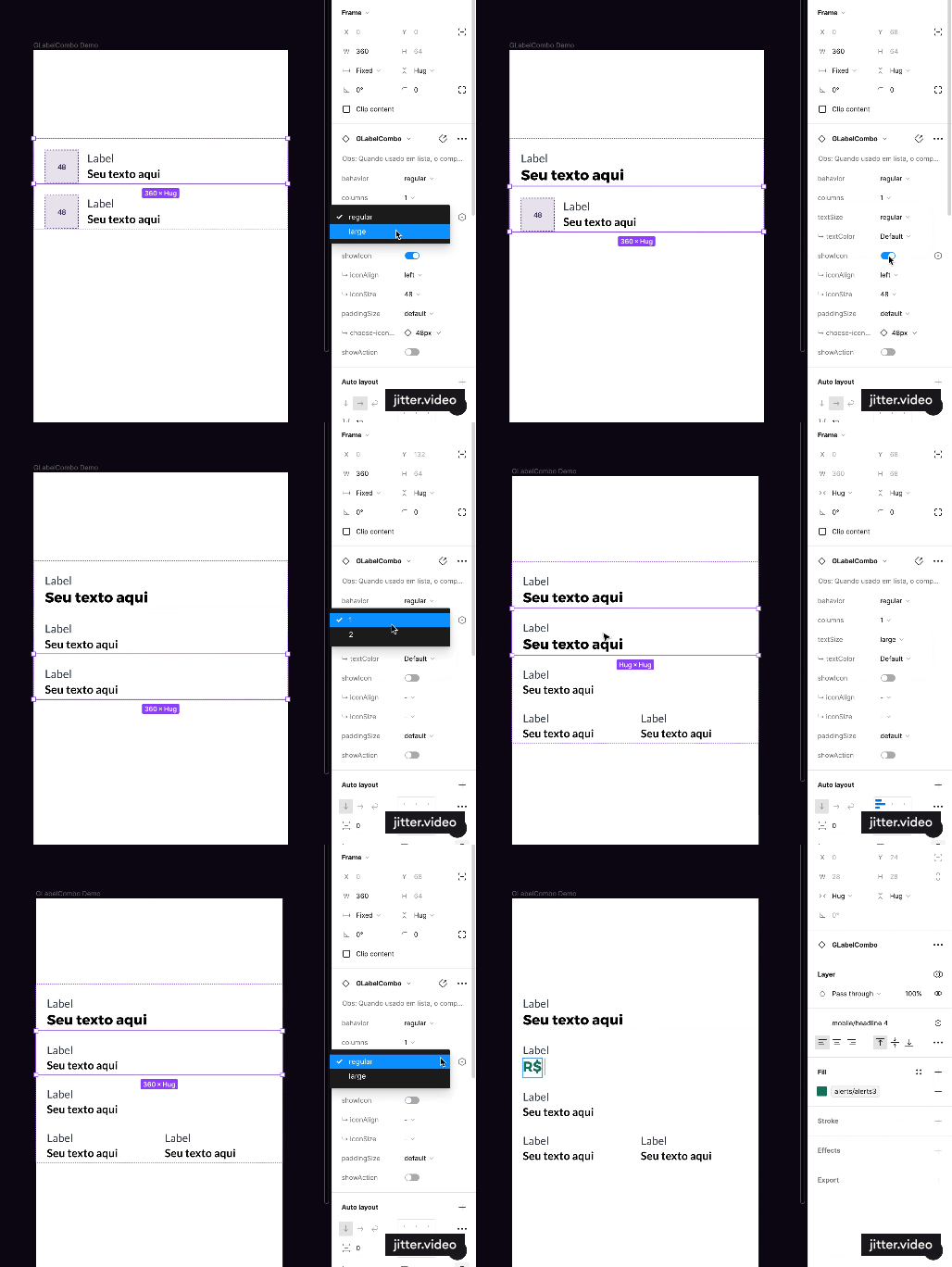
GLabelCombo — focused on small blocks of information, ideal for labels and short descriptions in simpler screens.
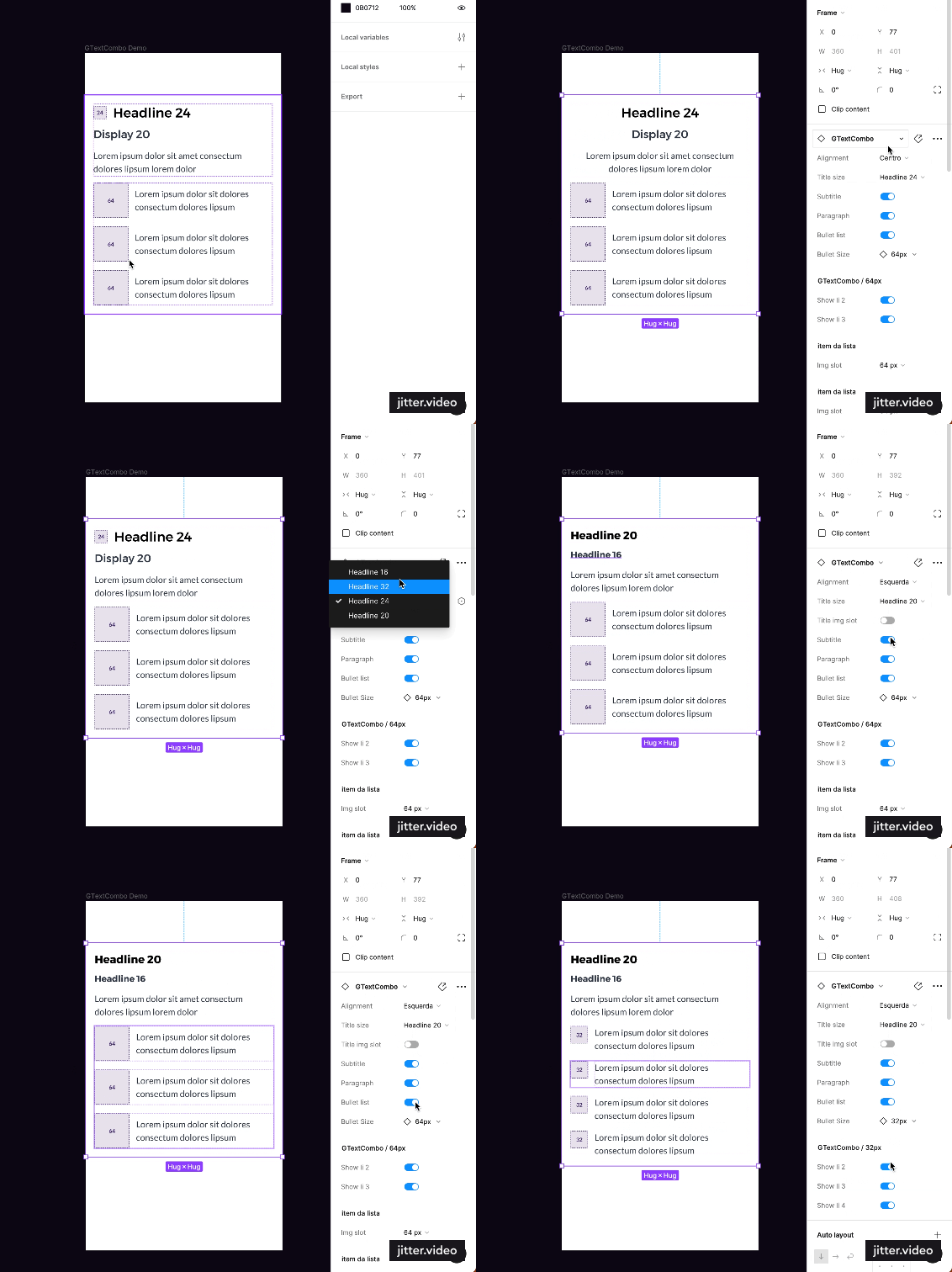
GTextCombo — designed to cover all possible combinations of long and short texts. It allows mixing titles, paragraphs, subtitles,
Both work like Lego pieces: they can be used individually or combined, depending on the project’s needs.
Why does this matter?
The value lies not only in the speed of creation but also in the consistency of the final experience. When different designers rely on the same foundational structures, the product’s interface becomes more predictable, cohesive, and easier to navigate for users.
Additionally, Small Templates reduce the cognitive load of design teams, freeing up more mental space to focus on strategic and creative decisions rather than repetitive details.
👉 In short: Small Templates accelerate the design process while maintaining quality and consistency. They represent a bridge between operational efficiency and creative freedom, helping teams build more robust and scalable digital experiences.
Small templates: Helping designers make smarter decisions with ready-to-use structures.
What are Small Templates and how do they help in everyday design?
When designing digital interfaces, one of the biggest challenges is dealing with the endless number of decisions: which text hierarchy to use, how to organize information blocks, and how to balance consistency with flexibility. This is where Small Templates come in.
Small Templates are flexible components that bring pre-defined combinations of interface elements such as titles, subtitles, paragraphs, bullet points, and labels. They act as smart shortcuts, offering ready-to-use text structures that can be quickly applied to different screens.
Instead of building every layout from scratch, designers start from a base that already considers usage patterns and best practices, reducing the time spent on repetitive decisions.
Practical examples
GLabelCombo — focused on small blocks of information, ideal for labels and short descriptions in simpler screens.
GTextCombo — designed to cover all possible combinations of long and short texts. It allows mixing titles, paragraphs, subtitles,
Both work like Lego pieces: they can be used individually or combined, depending on the project’s needs.
Why does this matter?
The value lies not only in the speed of creation but also in the consistency of the final experience. When different designers rely on the same foundational structures, the product’s interface becomes more predictable, cohesive, and easier to navigate for users.
Additionally, Small Templates reduce the cognitive load of design teams, freeing up more mental space to focus on strategic and creative decisions rather than repetitive details.
👉 In short: Small Templates accelerate the design process while maintaining quality and consistency. They represent a bridge between operational efficiency and creative freedom, helping teams build more robust and scalable digital experiences.
Small templates: Helping designers make smarter decisions with ready-to-use structures.
What are Small Templates and how do they help in everyday design?
When designing digital interfaces, one of the biggest challenges is dealing with the endless number of decisions: which text hierarchy to use, how to organize information blocks, and how to balance consistency with flexibility. This is where Small Templates come in.
Small Templates are flexible components that bring pre-defined combinations of interface elements such as titles, subtitles, paragraphs, bullet points, and labels. They act as smart shortcuts, offering ready-to-use text structures that can be quickly applied to different screens.
Instead of building every layout from scratch, designers start from a base that already considers usage patterns and best practices, reducing the time spent on repetitive decisions.
Practical examples
GLabelCombo — focused on small blocks of information, ideal for labels and short descriptions in simpler screens.
GTextCombo — designed to cover all possible combinations of long and short texts. It allows mixing titles, paragraphs, subtitles,
Both work like Lego pieces: they can be used individually or combined, depending on the project’s needs.
Why does this matter?
The value lies not only in the speed of creation but also in the consistency of the final experience. When different designers rely on the same foundational structures, the product’s interface becomes more predictable, cohesive, and easier to navigate for users.
Additionally, Small Templates reduce the cognitive load of design teams, freeing up more mental space to focus on strategic and creative decisions rather than repetitive details.
👉 In short: Small Templates accelerate the design process while maintaining quality and consistency. They represent a bridge between operational efficiency and creative freedom, helping teams build more robust and scalable digital experiences.